
Unlock a world of inclusivity and improved user engagement with our ADA compliance services. Ensuring your website is accessible to people with disabilities isn’t just the right thing to do; it’s also a smart business move.
With ADA compliance, you demonstrate social responsibility, expand your audience reach, and minimize the risk of legal complications down the line. Our experts evaluate your website and implement the necessary changes – from alt text for images to keyboard navigability – making your site welcoming to everyone.
Experience the dual benefits of ethical business practices and broader customer engagement.
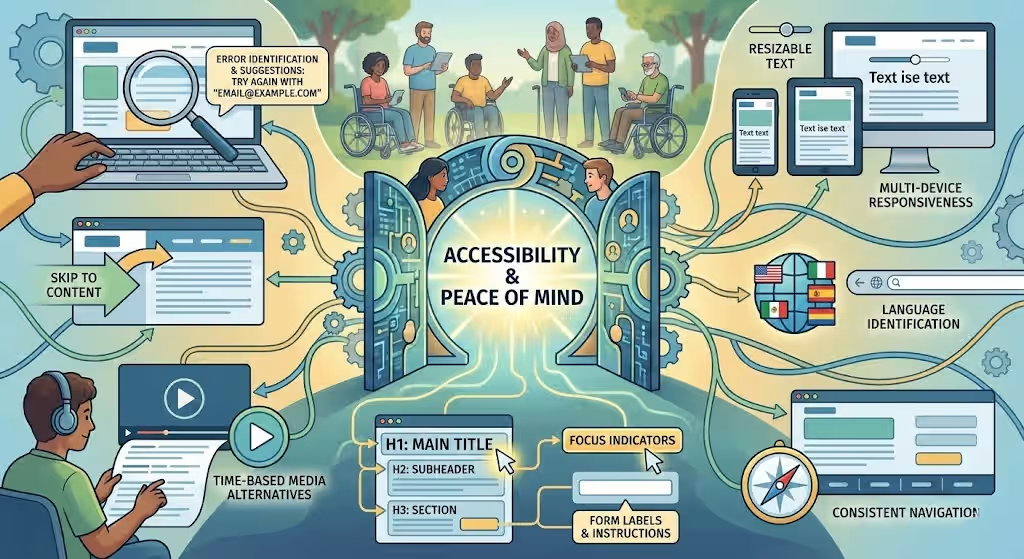
We'll help you to provide clear, understandable error messages, and offer solutions that assist users in filling out forms or completing actions.
These allow keyboard users to bypass headers and navigation menus, jumping straight to the primary content.
Enabling users to resize text without the use of assistive technology ensures readability for all.
HTML language tags can help translation tools and screen readers provide more accurate information.
Offering a consistent navigation scheme across your pages makes it easier for all users to find what they need.
Visual indicators can help keyboard users understand which element they're currently interacting with.
Properly labeled forms and fields guide users effectively, especially those using screen readers.
We can make sure that ADA features work seamlessly across different devices like smartphones, tablets, and desktops.
Providing alternatives such as transcripts for time-based media (videos or podcasts) helps everyone to access the information.
Using descriptive titles and headers that break up your information into "chunks" helps provide context and easy navigation for screen-reading technologies.
Navigating the complexities of the Unruh Civil Rights Act and ADA Title III requires more than just automated tools; it requires local expertise. Kha Creation provides comprehensive audits and manual testing specifically tailored for Northern California.

As a Northern California agency, we specialize in mitigating the high volume of Unruh Act demand letters targeting local businesses. With California accounting for nearly 40% of all U.S. ADA lawsuits, our San Francisco expertise provides the manual verification required to stand up to legal scrutiny.
We provide localized support for small businesses and municipal entities across Antioch and the East Bay, helping you mitigate the risk of "drive-by" digital lawsuits and ensuring your services are accessible to all residents.
Our team focuses on high-stakes industries, including healthcare web accessibility in Contra Costa, where patient privacy and WCAG standards must work in tandem to ensure full legal protection.